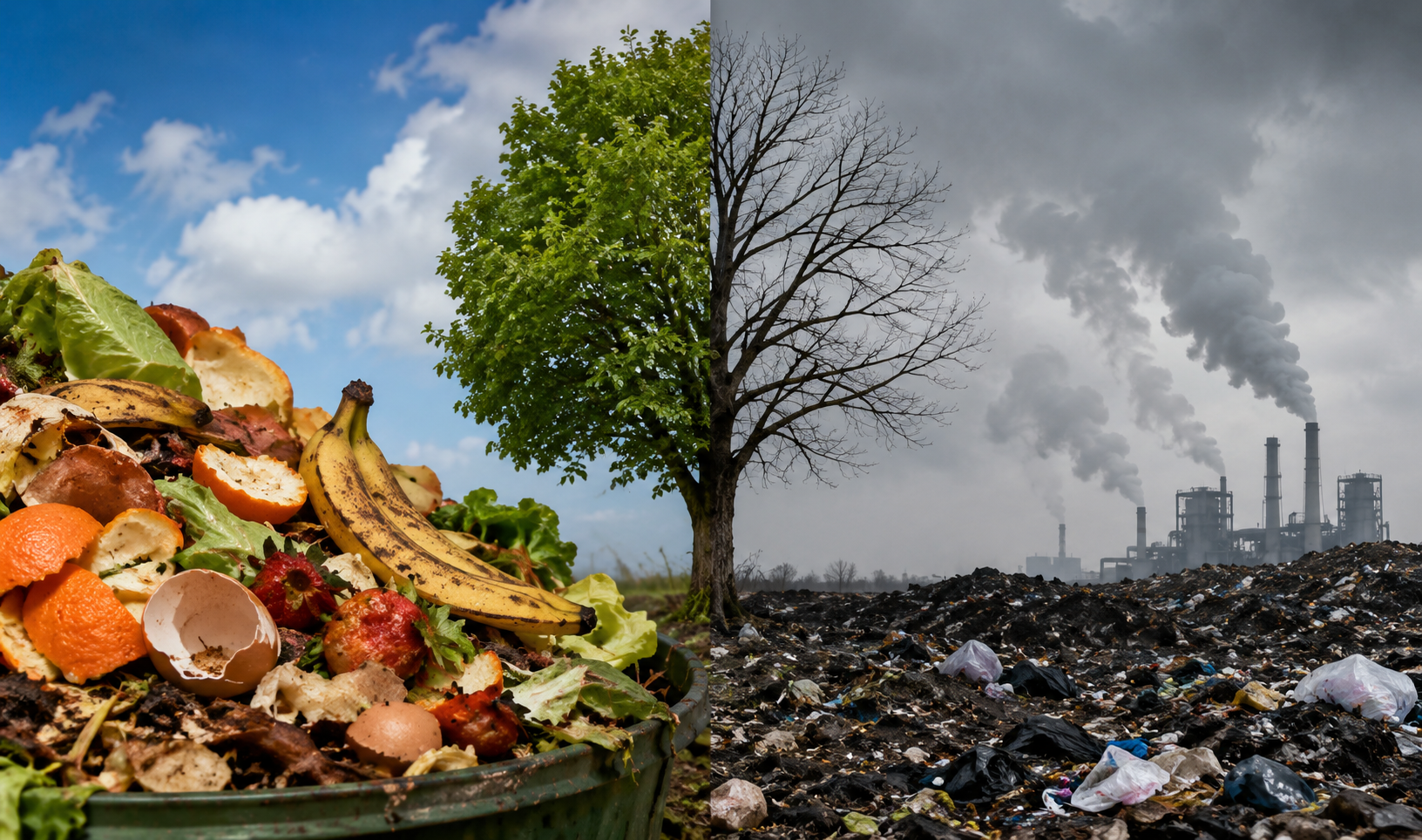
Food wastage has become one of the most serious environmental and social challenges across the world. Every year, millions of tonnes of edible food are discarded while a significant portion of the global population continues to suffer from hunger and malnutrition. The issue is not only about wasted food; it also involves the waste of water, energy, labor, land, and other valuable resources used in food production. According to the research paper “Food Wastage: A Threat to the Environment” by Priyanka Bhati and Kirtika Swami, food waste contributes heavily to environmental degradation, greenhouse gas emissions, and food insecurity.
The global food supply chain is one of the most interconnected systems in the world, yet it remains highly unsustainable. Food that is still fit for human consumption is often discarded during retail, distribution, and household consumption stages. Improper food waste management leads to severe environmental consequences, including methane emissions from landfills, pollution of water bodies, and unnecessary pressure on natural resources.
Understanding Food Waste
Food Waste refers to edible food that is discarded or left unused at various stages of the supply chain. It commonly occurs due to over-purchasing, poor storage practices, large portion sizes, confusion regarding expiry dates, and excessive food preparation. Household consumption contributes significantly to food waste globally.
In India, food wastage is a major concern despite the country being one of the world’s largest food producers. Millions of people still struggle with food insecurity and undernutrition. The contradiction between widespread hunger and large-scale food wastage highlights the urgent need for better food management practices.
According to the UNEP Food Waste Index Report 2021, around 931 million tonnes of food are wasted globally every year, with households contributing the largest share. Indian households alone contribute approximately 68.7 million tonnes of food waste annually, averaging nearly 50 kilograms per person each year.
You can read more about food waste on Wikipedia and the official UNEP Food Waste Index Report 2021.
Environmental Impact of Food Wastage
Food wastage has devastating environmental impacts. When food is thrown away, all the resources used in producing, processing, transporting, and storing that food are also wasted. These include water, electricity, fuel, fertilizers, agricultural land, and labor.
One of the most dangerous consequences of food waste is the production of methane gas in landfills. Organic food waste decomposes anaerobically in dumping sites, releasing methane, a greenhouse gas significantly more harmful than carbon dioxide in terms of global warming potential.
The research highlighted that many respondents were aware that food waste produces methane gas, but fewer understood the long-term environmental damage caused by methane emissions. Methane contributes directly to Climate Change, rising global temperatures, and extreme weather conditions.
Environmental experts have noted that if food waste were considered a country, it would rank as the third-largest emitter of greenhouse gases after China and United States.
Additionally, food wastage contributes to:
- Water pollution
- Soil degradation
- Biodiversity loss
- Landfill accumulation
- Excessive use of natural resources
- Higher carbon footprint
The United Nations Environment Programme estimates that food waste contributes approximately 8–10% of global greenhouse gas emissions.
Major Causes of Food Wastage
Food wastage occurs at multiple levels of society. The primary causes include:
1. Over-Purchasing
Consumers often buy more food than required, especially during festivals, celebrations, and discount sales. Excess food frequently spoils before consumption.
2. Improper Storage
Lack of proper refrigeration and storage facilities leads to spoilage of fruits, vegetables, dairy products, and cooked food.
3. Large Portion Sizes
Restaurants, hotels, and households often prepare or serve excessive quantities of food, resulting in plate waste.
4. Confusion About Expiry Labels
Many people misunderstand “best before” and “expiry” dates, causing edible food to be discarded unnecessarily.
5. Lack of Meal Planning
Poor planning regarding meals and grocery shopping increases the chances of unused food being thrown away.
6. Cultural and Social Practices
In many social gatherings and weddings, large amounts of food are prepared to showcase hospitality, leading to massive wastage.
Findings from the Research Study
The study conducted among 55 urban students revealed interesting insights regarding awareness and practices related to food waste management.
Awareness Levels
- More than 90% of respondents had heard about food waste management.
- Around 87% were aware of the harmful environmental effects of food wastage.
- Nearly 78% knew that methane gas is produced from food waste in landfills.
- However, only around 54% understood the harmful environmental impact of methane gas.
These findings indicate that while general awareness exists, deeper scientific understanding remains limited.
Food Handling Practices
The study also analyzed daily food management practices among respondents:
- Around 65% planned meals regularly.
- More than 70% considered food quantity before serving.
- Approximately 59% refrigerated leftover food.
- Nearly 76% checked expiry dates before purchasing food products.
Although these practices are positive, inconsistencies were observed in food preservation, reuse of stored food, and proper disposal methods.
Awareness About Government Initiatives
The study found that awareness regarding initiatives by the Food Safety and Standards Authority of India was relatively high. However, knowledge regarding food waste laws and global reports remained limited.
This highlights the importance of awareness campaigns and educational programs to encourage responsible food consumption habits.
Sustainable Food Management Practices
Sustainable food management focuses on reducing food waste through efficient consumption, storage, recycling, and redistribution practices. Proper food management can improve food security while protecting the environment.
Meal Planning
Planning meals helps households purchase only the required amount of food, minimizing spoilage and unnecessary waste.
Food Preservation
Traditional preservation methods such as pickling, drying, freezing, and making jams or sauces can extend food shelf life.
Composting
Food scraps can be converted into organic compost instead of being dumped in landfills.
Food Donation
Excess edible food can be donated to charities, food banks, and community kitchens.
Awareness Campaigns
Educational initiatives can encourage individuals to adopt responsible food consumption habits.
According to discussions on Reddit, many users believe that portion control, improved storage systems, and food redistribution programs can significantly reduce household food waste.
Need for Stronger Policies and Awareness
The study emphasized the need for stronger policy implementation and public awareness regarding food waste management. While campaigns and institutional initiatives are improving awareness, many people remain unaware of legal frameworks and global sustainability efforts.
Governments and organizations should focus on:
- Strengthening food redistribution systems
- Encouraging segregation of organic waste
- Promoting composting and recycling
- Supporting sustainable agriculture
- Creating stricter regulations on food waste disposal
- Expanding public awareness programs
A coordinated multi-stakeholder approach involving governments, educational institutions, businesses, and communities is necessary to tackle food wastage effectively.
Conclusion
Food wastage is not merely a social issue; it is a major environmental and sustainability challenge affecting the entire planet. The large-scale disposal of edible food contributes to greenhouse gas emissions, environmental pollution, and depletion of natural resources while millions continue to face hunger and malnutrition.
The findings from the study demonstrate that although people possess general awareness regarding food waste, there remains a considerable gap between knowledge and practical implementation. Responsible food consumption habits, scientific awareness, and sustainable waste management practices are essential for reducing food wastage.
Addressing this issue requires collective action at individual, community, institutional, and governmental levels. By promoting mindful consumption, better storage practices, food preservation, and public awareness, society can move toward a more sustainable and food-secure future.
References
- UNEP Food Waste Index Report 2021.
- The State of Food and Agriculture 2019 — FAO Food Loss and Waste Report.
- Batool, F., Kurniawan, T. A., Mohyuddin, A., Othman, M. H. D., Aziz, F., Al-Hazmi, H. E., … & Anouzla, A. (2024). Environmental impacts of food waste management technologies: A critical review of life cycle assessment (LCA) studies. Trends in Food Science & Technology, 143, 104287. https://doi.org/10.1016/j.tifs.2023.104287
- Kohli, K., Prajapati, R., Shah, R., Das, M., & Sharma, B. K. (2024). Food waste: environmental impact and possible solutions. Sustainable Food Technology, 2(1), 70-80. https://doi.org/10.1039/D3FB00141E
- Sun, S. K., Lu, Y. J., Gao, H., Jiang, T. T., Du, X. Y., Shen, T. X., … & Wang, Y. B. (2018). Impacts of food wastage on water resources and environment in China. Journal of Cleaner Production, 185, 732-739. https://doi.org/10.1016/j.jclepro.2018.03.029
- Bhati, P., & Swami, K. (2026). Food Wastage: A Threat to the Environment. International Journal of Environment and Climate Change, 16(5), 304–312. DOI: https://doi.org/10.9734/ijecc/2026/v16i55440